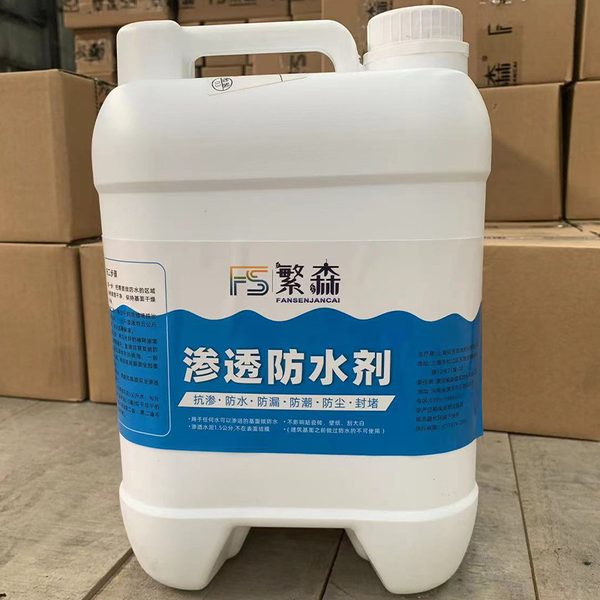
Potassium methyl silicate penetrant — invisible protection from within
Unlike surface coatings, this nano-technology penetrant soaks into concrete, brick, and stone, forming a hydrophobic barrier deep inside the material. The surface looks and feels unchanged — but water beads off and cannot penetrate. Ideal for protecting exterior walls against sandstorm erosion, coastal salt spray, and desert humidity cycles.
| Active Ingredient | Potassium methyl silicate |
|---|---|
| Concentration | 42-52% (dilute 1:5 to 1:10 with water before use) |
| Appearance | Clear to slightly milky liquid |
| pH | 11-13 (alkaline) |
| Penetration Depth | 3-8mm (varies by substrate porosity) |
| Water Absorption Reduction | ≥ 90% |
| Drying Time | Surface dry 1-2 hours, full reaction 7 days |
| Coverage (diluted) | 0.2-0.4 L/m² per coat (2-3 coats) |
| Application | Low-pressure spray or brush |
| Shelf Life | 24 months (sealed) |
| Packaging | 5L / 20L / 200L |
| MOQ | 50 units (5L) or 10 units (20L) |
Invisible protection for porous building materials
Protect exposed concrete facades from rain, humidity, and sandstorm erosion without changing appearance.
Heritage buildings, stone cladding, decorative brick — keep the original look while adding water resistance.
Prevents salt spray penetration and efflorescence on buildings near the sea — critical in Gulf coastal cities.
Bridges, tunnels, retaining walls — extend service life by preventing water and chloride penetration.
Unlike surface coatings that form a film, nano waterproof agent penetrates 3mm+ into the substrate and creates a hydrophobic barrier inside the capillary structure. It does not change the surface appearance and maintains 95%+ breathability. Water beads off the surface while moisture vapor can still escape.
Nano waterproof agent is based on inorganic silicone chemistry (potassium methyl silicate) which does not degrade under UV or heat. Expected service life is 10-15 years on exterior walls. It withstands temperatures from -40°C to +150°C.
Yes. It is ideal for natural stone, limestone, sandstone, and historic buildings because it penetrates without forming a visible film. The original appearance and texture are fully preserved. Widely used for heritage building conservation.